When homeowners experience weak airflow, noisy vents, hot and cold rooms, or an HVAC system that seems to run constantly, they often assume the air conditioner or furnace is the problem.
Sometimes the equipment itself is working correctly.
The real problem may be how difficult it is for the system to move air through the home’s ductwork.
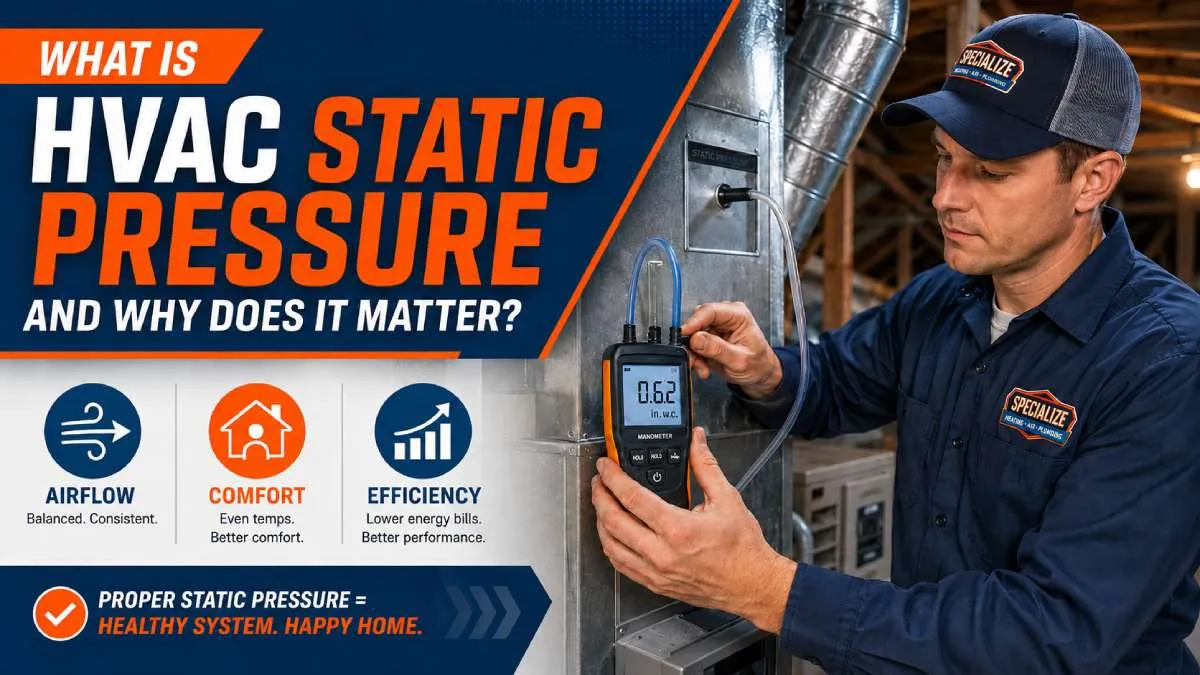
HVAC professionals measure this resistance using something called static pressure.
Understanding static pressure can help explain why replacing an air conditioner or installing a stronger blower does not always solve an airflow problem.
Think of Static Pressure as Resistance to Airflow
Your HVAC blower has to move air through several components before that air reaches the rooms in your home.
Air may travel through:
- An air filter
- Return-air ducts
- The furnace or air handler
- An evaporator coil
- Supply ductwork
- Dampers
- Registers and vents
Every component creates some resistance.
Static pressure as resistance to airflow within the duct system. Excessive resistance can reduce the amount of air the system actually moves.
A properly designed HVAC system takes this resistance into account.
Problems begin when airflow becomes more restricted than the equipment was designed to handle.
What Can Cause High Static Pressure?
There is no single cause.
A technician may find one problem or several contributing factors.
A Dirty or Restrictive Air Filter
Air filters are necessary, but air still needs to pass through them.
A dirty filter can dramatically restrict airflow. Some high-filtration filters may also create too much resistance if the HVAC system was not designed for them.
This does not mean homeowners should avoid good filtration. It means the filter and HVAC system need to work together.
Undersized Return Ductwork
Your HVAC system cannot deliver more air than it can pull back into the equipment.
If return ductwork is too small or restricted, the blower may struggle to move the required amount of air.
Closed or Blocked Registers
Closing vents in unused bedrooms may seem like a good way to redirect cooling elsewhere.
Unfortunately, closing too many registers can increase resistance inside some duct systems rather than improving overall comfort.
Furniture, rugs, curtains, and other objects can also block airflow.
Dirty HVAC Components
An evaporator coil, blower assembly, or other component with significant dirt buildup may restrict airflow.
This is one reason routine HVAC maintenance is important.
Ductwork Problems
Crushed flexible ductwork, undersized ducts, sharp bends, incorrect transitions, disconnected sections, or poor system design can all affect airflow.
ENERGY STAR recommends making sure ductwork is properly connected, sealed, insulated where needed, and configured to support efficient heating and cooling. (ENERGY STAR)
Signs Your HVAC System May Have an Airflow Problem
High static pressure itself is something a technician measures, but homeowners may notice symptoms such as:
- Weak airflow from certain vents
- Loud rushing or whistling sounds
- Doors moving when the HVAC system starts
- Rooms that remain uncomfortable
- Frequent HVAC cycling
- Excessive dust
- A blower that sounds unusually loud
- Filters that become dirty unusually quickly
- Higher heating or cooling bills
- Difficulty maintaining the thermostat setting
These symptoms can have other causes, so they should not be used to diagnose static pressure without testing.
Why Installing a Bigger HVAC System Is Not the Solution
If airflow is already restricted, installing larger equipment may make the situation worse.
A larger HVAC system generally needs to move more air.
If the ductwork cannot accommodate that airflow, the homeowner may end up with new equipment connected to the same underlying problem.
This is why professional HVAC replacement should include more than selecting a unit based on the size of the old equipment.
System sizing, blower performance, ductwork, return-air capacity, filtration, and airflow should all be considered.
How Is Static Pressure Checked?
HVAC technicians can measure pressure at specific locations within the system using professional diagnostic instruments.
Those measurements can help determine whether airflow resistance is within an appropriate range for the equipment.
If the pressure is too high, the next step is determining why.
Solutions might include:
- Replacing a clogged filter
- Correcting duct restrictions
- Increasing return-air capacity
- Adjusting blower settings
- Cleaning HVAC components
- Repairing damaged ductwork
- Correcting improperly sized ducts or fittings
The appropriate solution depends on what the testing reveals.
Better Airflow Can Mean Better Comfort
Your heating and cooling equipment is only one part of the comfort system.
The ductwork has to deliver the conditioned air efficiently throughout the house.
If your air conditioner or furnace seems to be operating but airflow feels weak, rooms remain uncomfortable, or vents are unusually noisy, an airflow evaluation may help identify the underlying problem.
Specialize Home Services provides HVAC diagnostics, airflow evaluations, duct and vent services, heating and air-conditioning repair, maintenance, and system replacement throughout Southern California. Our technicians can inspect the equipment and airflow system to help determine why your home is not staying comfortable.
