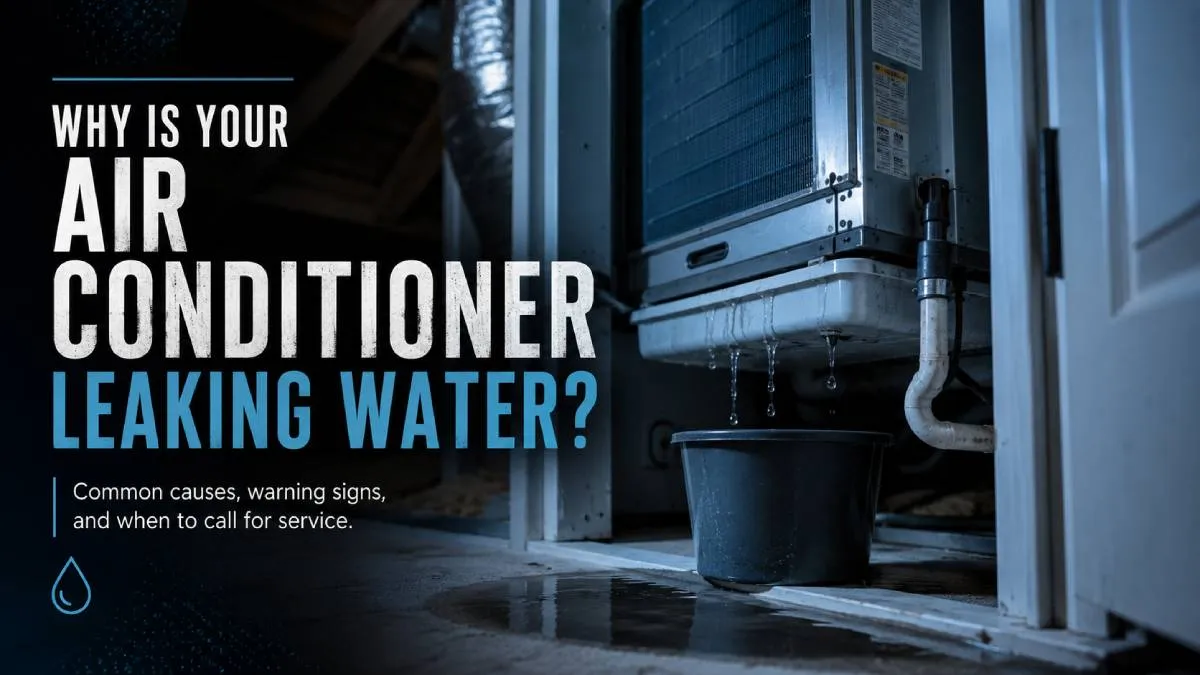
Finding water around your indoor air-conditioning unit can be alarming, especially when the equipment is located in an attic, closet, or area above a finished ceiling.
Your air conditioner naturally produces condensation while it cools your home. Under normal conditions, that moisture collects in a drain pan and leaves the home through a condensate drain line.
When the drainage system becomes blocked or another HVAC problem develops, water can overflow into the surrounding area. Clogged condensate lines, frozen evaporator coils, and damaged drain pans as common reasons an air conditioner may leak water.
A Clogged Condensate Drain Line
A clogged drain line is one of the most common causes of water around an indoor AC unit.
Dust, dirt, biological buildup, and other debris can collect inside the condensate line. When the blockage prevents water from draining, the pan may fill and overflow.
Depending on where the system is installed, the leaking water could damage:
- Drywall
- Ceilings
- Flooring
- Insulation
- Cabinets
- Framing
- Stored belongings
Some systems have a condensate safety switch that shuts the indoor unit off when the water level rises. Manufacturers note that systems without a functioning safety switch may continue operating until the drain pan overflows.
This means an AC system that suddenly stops cooling may have shut down to prevent a water leak rather than because the outdoor equipment has failed.
A Frozen Evaporator Coil
The evaporator coil absorbs heat from the indoor air. When airflow across the coil is restricted, the coil can become too cold and develop ice.
Possible causes include:
- A dirty or overly restrictive air filter
- Blocked return vents
- Blower problems
- Dirty evaporator coils
- Collapsed or restricted ductwork
- Low refrigerant caused by a leak
When the ice eventually melts, the volume of water may overwhelm the drain pan or condensate line.
If you see ice on the refrigerant lines or indoor coil, turn the system off and arrange for professional service. Repeatedly restarting a frozen system can allow the underlying problem to continue and may lead to more serious equipment damage.
A Rusted or Cracked Drain Pan
The drain pan sits beneath the indoor evaporator coil and collects condensation. Over time, a metal pan may rust or develop cracks.
A damaged pan can leak even when the condensate line is open. Water may drip slowly beneath the unit or appear only during long cooling cycles.
Manufacturers advise that clogged, cracked, or rusted drain pans can leak or overflow and that condensate lines may also become blocked with dirt, debris, or biological growth.
Drain-pan problems can be particularly serious when an air handler is installed in an attic.
A Damaged or Disconnected Drain Line
PVC condensate piping can crack, separate at a fitting, or become improperly pitched. If the pipe no longer slopes correctly toward the drain outlet, water may remain trapped in the line.
Improper installation can also cause drainage problems. The line needs suitable routing, support, connections, and access for future cleaning.
A technician can inspect the entire drainage path rather than clearing only the visible opening.
Should You Keep Running the AC?
When water is actively leaking around the indoor unit, it is generally safest to turn off the air conditioner until the source can be identified.
Continuing to run the system may produce more condensation and increase the amount of water entering the surrounding area.
Take these immediate steps:
- Turn off the HVAC system at the thermostat.
- Move belongings away from the leaking area.
- Use towels or a wet vacuum to remove accessible standing water.
- Check whether the air filter is extremely dirty.
- Avoid opening electrical panels or dismantling HVAC equipment.
- Contact a qualified HVAC technician.
Water near electrical components should be treated cautiously.
How Maintenance Helps Prevent Condensate Problems
Routine air-conditioning maintenance gives a technician an opportunity to inspect the condensate system before a blockage causes visible damage.
Depending on the system, maintenance may include:
- Inspecting and clearing the condensate line
- Checking the drain pan
- Testing the float or safety switch
- Examining the evaporator coil
- Checking the air filter
- Measuring system airflow
- Looking for signs of refrigerant or drainage problems
Recommend having clogged AC drain lines handled carefully so the PVC piping and other system components are not damaged during cleaning.
Do Not Ignore Water Around Your HVAC System
Even a small puddle can be an early warning sign. The faster the drainage or airflow problem is corrected, the easier it may be to prevent damage to ceilings, drywall, flooring, and HVAC components.
Specialize Home Services provides air-conditioning diagnostics, condensate-drain service, AC repair, and seasonal HVAC maintenance throughout Southern California. Contact our team when you notice water around your air handler, unexplained system shutdowns, frozen lines, or other signs of an AC problem.
