Strong water pressure can make a shower feel satisfying, but more pressure is not always better for your plumbing system.
When water enters a home at excessive pressure, it can place unnecessary stress on pipes, fixture connections, appliance valves, supply lines, and seals. The problem may remain unnoticed until a faucet begins dripping, a toilet valve fails, or a supply hose develops a leak.
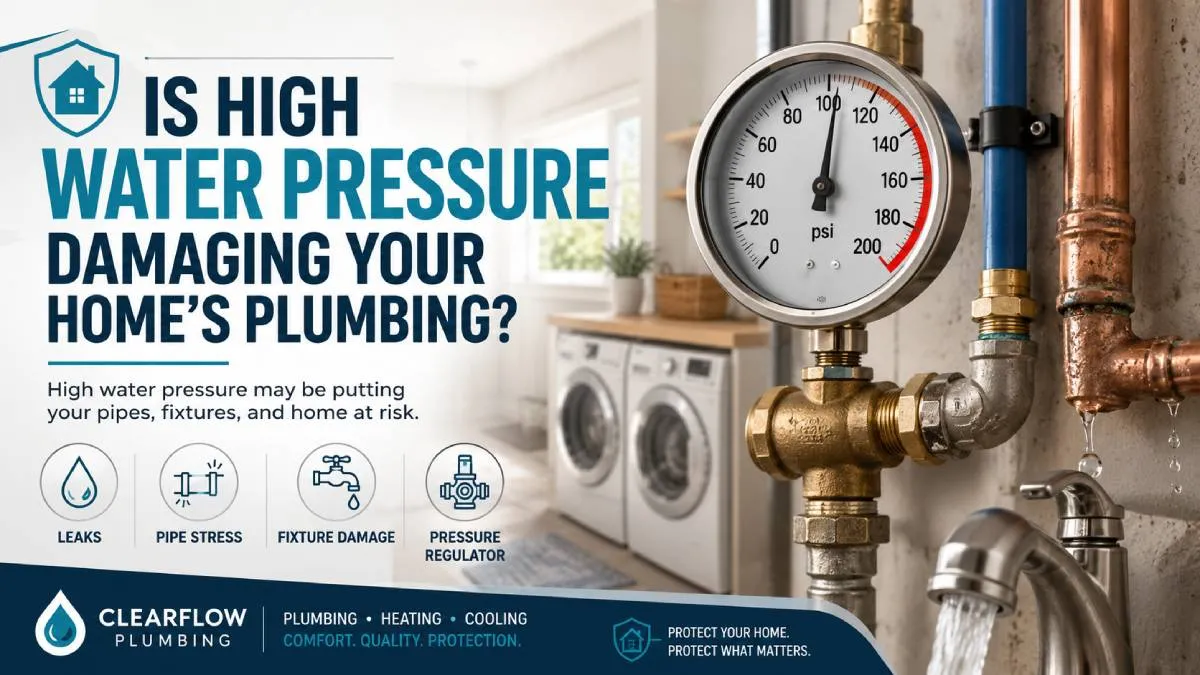
The Environmental Protection Agency notes that high water pressure can damage plumbing piping, fixtures, and appliances while increasing water consumption and the risk of leaks. EPA WaterSense recommends incoming residential service pressure between approximately 45 and 60 psi and notes that pressure should not exceed 80 psi. (EPA Nepis)
Common Signs of Excessive Water Pressure
High pressure does not always produce an obvious emergency. It frequently creates smaller recurring problems throughout the home.
Possible warning signs include:
- Faucets that drip soon after repair
- Toilets that run or make unusual filling noises
- Banging or knocking pipes
- Water that blasts forcefully from faucets
- Frequent appliance-valve problems
- Premature failure of flexible supply lines
- Unexplained increases in water use
- Leaks at plumbing connections
- A water heater relief valve that releases water
One symptom alone does not prove that the pressure is too high. However, several recurring fixture or valve problems may justify a professional pressure test.
How Is Home Water Pressure Tested?
Water pressure can be measured with a pressure gauge attached to an exterior hose bib or another compatible connection. For a useful static-pressure reading, water-using fixtures and appliances should not be running during the test.
Pressure can change during the day as demand within the municipal system changes. A single reading may not reveal every pressure fluctuation, so a plumber may perform additional testing when symptoms are intermittent.
A professional can also inspect the pressure regulator, shutoff valve, water heater, expansion tank, and visible plumbing connections.
What Is a Pressure-Reducing Valve?
A pressure-reducing valve, commonly called a PRV or water pressure regulator, is installed near the home’s main water connection. Its purpose is to reduce incoming municipal pressure to a safer and more consistent level.
International plumbing standards generally require an approved pressure-reducing valve when static pressure within a building exceeds 80 psi. (ICC Codes)
A regulator does not necessarily last for the life of the home. Internal components can wear out, allowing pressure to rise, fall, or fluctuate.
Possible signs of a failing regulator include:
- Pressure that is suddenly much stronger or weaker
- Pressure that changes throughout the day
- Vibrating or humming near the main water line
- Repeated fixture and appliance leaks
- A pressure reading that cannot be adjusted correctly
Replacing or adjusting a PRV should be handled by a qualified plumber.
High Pressure Can Increase Water Consumption
When pressure is higher, more water can flow through an open fixture during the same amount of time. That means excessive pressure may increase water use even when household habits have not changed.
It can also make small leaks more severe. A worn faucet cartridge, toilet valve, or supply-line connection may release more water when it is under greater pressure.
Correcting the pressure does not replace the need to repair existing leaks, but it may help protect repaired fixtures and plumbing components from continued stress.
The Role of a Water-Heater Expansion Tank
When water is heated, it expands. In a closed plumbing system, that expansion can increase pressure unless the system has a safe way to accommodate it.
Many homes use a thermal expansion tank near the water heater. If the tank has lost its air charge, has been sized incorrectly, or has failed internally, pressure may rise when the water heater operates.
This is different from consistently high incoming municipal pressure, although the symptoms can appear similar. A plumber can determine whether the regulator, expansion tank, water heater, or another component is causing the pressure problem.
Do Not Ignore Banging Pipes
Banging or knocking pipes may be related to water hammer, loose piping, quick-closing valves, excessive pressure, or a combination of factors.
Installing a water-hammer arrestor may help in certain locations, but the underlying water pressure should also be checked. Treating only the noise without identifying its cause may allow continued stress on the plumbing system.
Protect Your Plumbing With a Pressure Check
A water-pressure test is a relatively simple part of a plumbing evaluation, but it can reveal a condition that affects fixtures and appliances throughout the house.
Consider scheduling a plumbing inspection when you notice repeated leaks, noisy pipes, forceful flow, or frequent fixture failures.
Specialize Home Services provides plumbing diagnostics, leak repair, fixture service, water-heater service, and pressure-regulator evaluations throughout Southern California. Contact our team to have your home’s water pressure professionally checked.
