
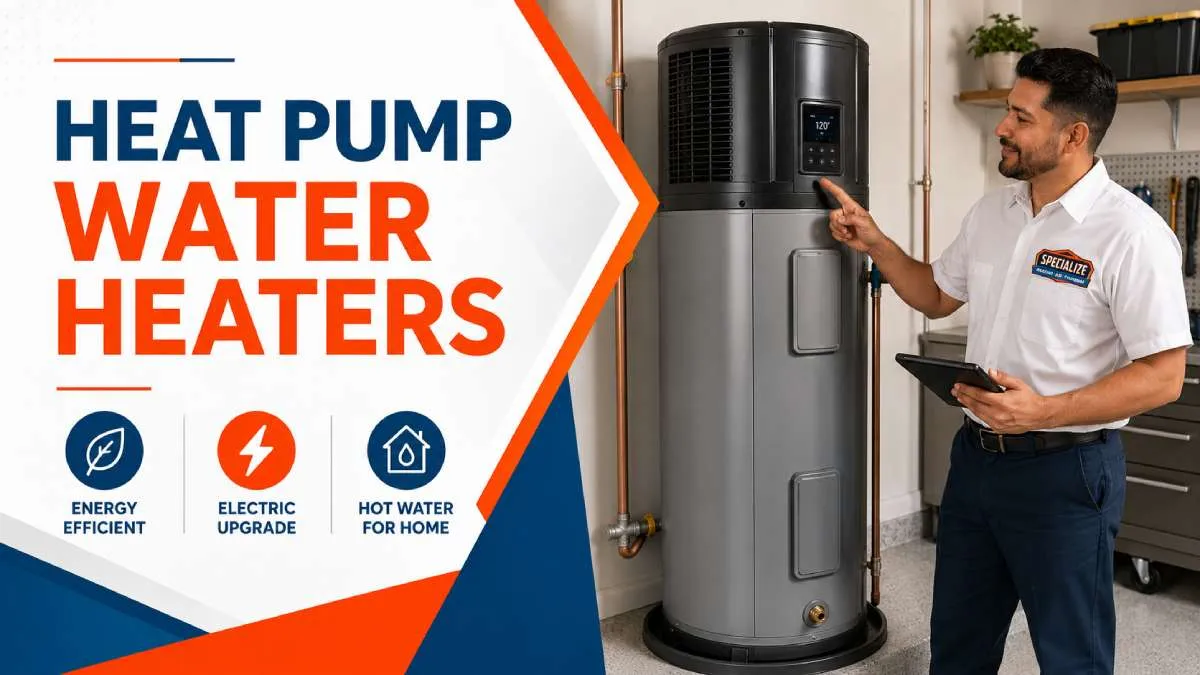
Heat Pump Water Heaters: Are They a Good Fit for Southern California Homes?
Most homeowners are familiar with traditional gas water heaters, standard electric water heaters, and tankless systems.
Another option is becoming increasingly visible in the residential water-heating market: the heat pump water heater, sometimes called a hybrid electric water heater.
Instead of creating heat entirely with an electric heating element, a heat pump water heater captures heat from the surrounding air and transfers that heat into the water stored inside its tank.
It is similar to the basic principle used by a refrigerator—but in reverse.
ENERGY STAR describes heat pump water heaters as electrically powered systems that move heat from the surrounding air into the stored water. Many models also include conventional electric resistance elements that can provide additional heating when hot-water demand is high. (ENERGY STAR)
For Southern California homeowners planning a future water-heater replacement, the technology may be worth understanding.
How Does a Heat Pump Water Heater Work?
A standard electric tank water heater creates heat using electric resistance elements inside the tank.
A heat pump water heater uses a compressor and heat exchanger to pull heat from the surrounding air and transfer it into the water.
Because the system is moving existing heat instead of creating all of its heat directly, it can use substantially less electricity than conventional electric resistance water heating.
ENERGY STAR reports that certified heat pump water heaters can provide significant energy savings compared with standard electric models. (ENERGY STAR)
The exact savings for any individual homeowner depend on hot-water usage, electricity rates, equipment selection, installation, operating mode, and other factors.
Why Southern California Can Be a Good Environment for the Technology
Heat pump water heaters depend on the temperature of the air surrounding them.
That makes installation location important.
Southern California’s relatively mild climate can make garages and utility areas potential locations for these systems, provided the space meets the manufacturer’s temperature, airflow, electrical, clearance, and installation requirements.
ENERGY STAR specifically advises evaluating installation temperature and available air volume before selecting a heat pump water heater. (ENERGY STAR)
A professional installer should evaluate the actual space instead of assuming every garage or utility closet is suitable.
Heat Pump Water Heaters Need Air
Unlike a conventional tank water heater, a heat pump water heater interacts with the air around it.
The unit needs adequate air volume to capture heat efficiently.
Installing one inside a very small enclosed closet without appropriate provisions for airflow could reduce performance.
Depending on the equipment and installation, solutions might include:
- Using a larger utility room or garage
- Installing a louvered door
- Adding approved ducting
- Selecting equipment designed for the available space
Manufacturer specifications should always guide the final installation.
They Also Produce Condensation
There is another important installation difference.
Because a heat pump water heater extracts heat from surrounding air, it can also produce condensation.
That water needs somewhere to drain.
A proper installation may therefore require access to a suitable drain or a condensate-management solution.
ENERGY STAR identifies condensate drainage as one of the items homeowners and installers should consider when planning a heat pump water-heater installation. (ENERGY STAR)
What About Electrical Requirements?
Electrical capacity should also be evaluated before purchasing equipment.
The requirements depend on the specific model.
Some installations may require electrical modifications, while certain newer heat pump water heaters are designed to accommodate different electrical configurations.
If you currently have a gas water heater, converting to an electric heat pump model deserves additional planning because the existing water-heater location may not already have the electrical connection required by the selected equipment.
This is another reason to plan a water-heater replacement before the old unit fails.
Tank Size Still Matters
Efficiency does not eliminate the need for adequate hot-water capacity.
A household with several family members, large soaking tubs, multiple showers, or heavy simultaneous hot-water demand may require a larger tank or a particular system configuration.
Heat pump water heaters commonly include different operating modes that allow them to balance energy efficiency with periods of higher hot-water demand.
A professional can evaluate household size and usage patterns to help determine the appropriate capacity.
Are There Any Trade-Offs?
Heat pump water heaters offer advantages, but they are not automatically the best option for every property.
Homeowners should consider:
- Initial equipment and installation cost
- Available installation space
- Airflow requirements
- Electrical requirements
- Condensate drainage
- Tank capacity
- Equipment sound
- Location relative to living areas
- Household hot-water demand
A conventional gas, standard electric, tankless, or heat pump water heater may each make sense in different situations.
Plan Before Your Existing Water Heater Fails
The worst time to research water heaters is often when the existing unit has stopped working and the household has no hot water.
Planning ahead gives homeowners time to compare technologies, evaluate the installation location, determine electrical requirements, select the right tank capacity, and review available equipment.
ENERGY STAR also encourages homeowners considering heat pump water heaters to plan their purchase before an emergency replacement is necessary. (ENERGY STAR)
Is a Heat Pump Water Heater Right for Your Home?
For some Southern California homes, a heat pump water heater can provide an efficient alternative to a conventional electric water heater and may also be worth considering when replacing an aging gas unit.
But installation conditions matter.
Before choosing equipment, have a qualified professional evaluate your existing water heater, household demand, installation space, electrical service, ventilation, drainage, and available water-heating options.
Specialize Home Services provides professional water-heater inspection, replacement, installation, maintenance, and plumbing services throughout Southern California. If your existing water heater is aging, our team can help you evaluate your options before it becomes an emergency.
