When an air conditioning system starts struggling, many homeowners assume the answer is simple: install a bigger unit. After all, Southern California summers can be hot, and it makes sense to want as much cooling power as possible.
But when it comes to HVAC systems, bigger is not always better.
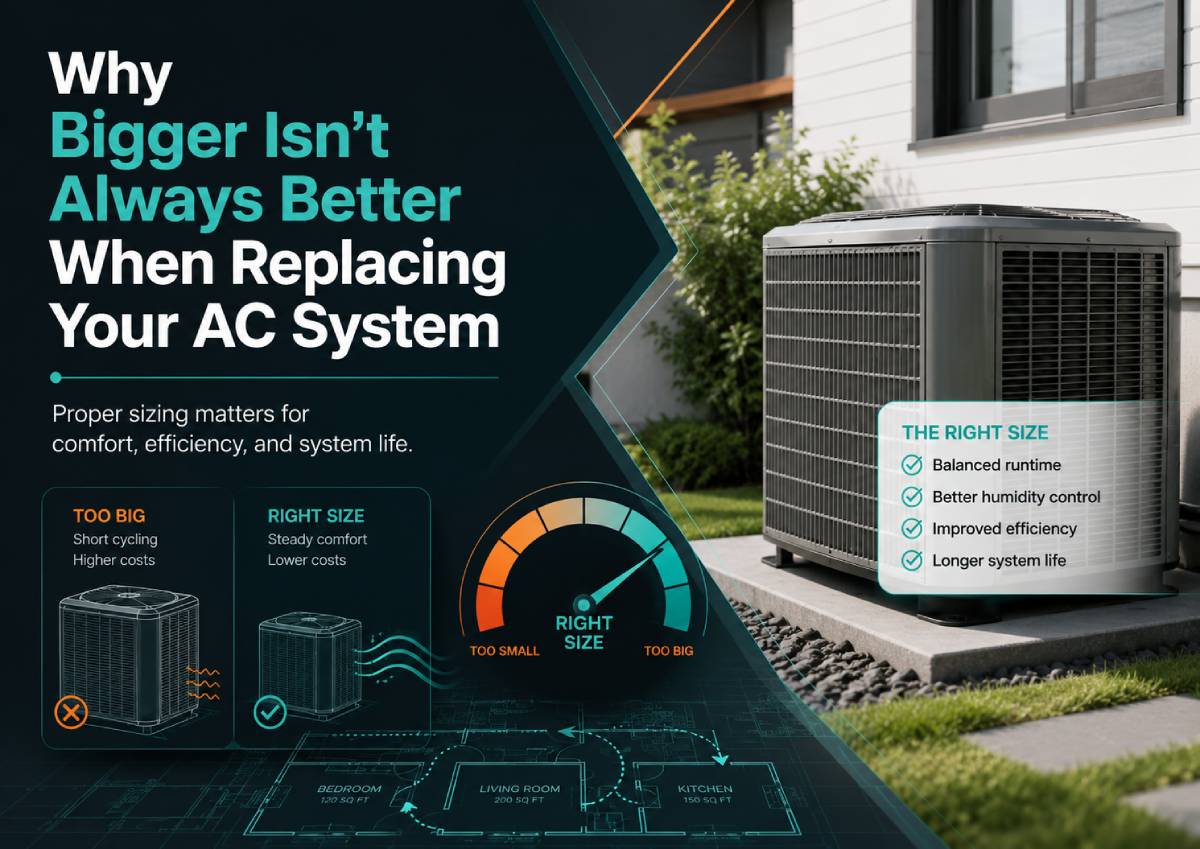
A properly sized system is one of the most important parts of long-term comfort, efficiency, and reliability. If the system is too small, it may run constantly and still fail to cool the home. If the system is too large, it can cycle on and off too quickly, reduce comfort, and create unnecessary wear.
What Happens When an AC System Is Too Large?
An oversized AC system may cool the air quickly, but that does not always mean it is doing the job correctly. Air conditioning is also responsible for helping manage indoor humidity and airflow.
When a system is too large, it can shut off before it has completed a full cooling cycle. This may lead to:
- Uneven room temperatures
- Short cycling
- Higher wear on components
- Poor humidity control
- Hot and cold spots
- Higher energy use
- Reduced system lifespan
A home can feel cool on the thermostat but still uncomfortable because the system is not running long enough to condition the space properly.
What Happens When an AC System Is Too Small?
An undersized system has the opposite problem. It may run for long periods without reaching the desired temperature, especially during peak afternoon heat.
Signs your system may be undersized or under-performing include:
- The AC runs almost constantly.
- Certain rooms never cool down.
- The thermostat setting is never reached.
- Energy bills keep rising.
- The system struggles during heat waves.
- Airflow feels weak at the vents.
However, these symptoms do not always mean the equipment is too small. Dirty filters, duct leaks, low refrigerant, poor insulation, or blocked airflow can create similar problems.
Why Professional Sizing Matters
Replacing an AC system should never be based on guesswork alone. The right system size depends on more than square footage. A professional evaluation may consider:
- Home size and layout
- Ceiling height
- Insulation levels
- Window type and sun exposure
- Ductwork condition
- Number of occupants
- Local climate
- Existing airflow issues
- Age and condition of the current equipment
This helps determine whether the home needs a new system, duct improvements, airflow balancing, maintenance, or another solution.
Ductwork Can Make or Break Performance
Even a high-efficiency AC system can perform poorly if the ductwork is leaking, damaged, undersized, or poorly balanced. Ducts are responsible for moving conditioned air throughout the home. If that air is lost in an attic, crawlspace, or wall cavity, comfort and efficiency suffer.
Before replacing equipment, it is smart to have the full system evaluated—not just the outdoor unit.
How Specialize Home Services Can Help
Specialize Home Services provides AC repair, installation, replacement, seasonal maintenance, thermostat upgrades, and airflow balancing. If your current system is not keeping up, the team can inspect your equipment, check for common performance issues, and explain your options clearly.
A properly sized system can help your home stay more comfortable without unnecessary strain. Before choosing “bigger,” choose the right fit.
