
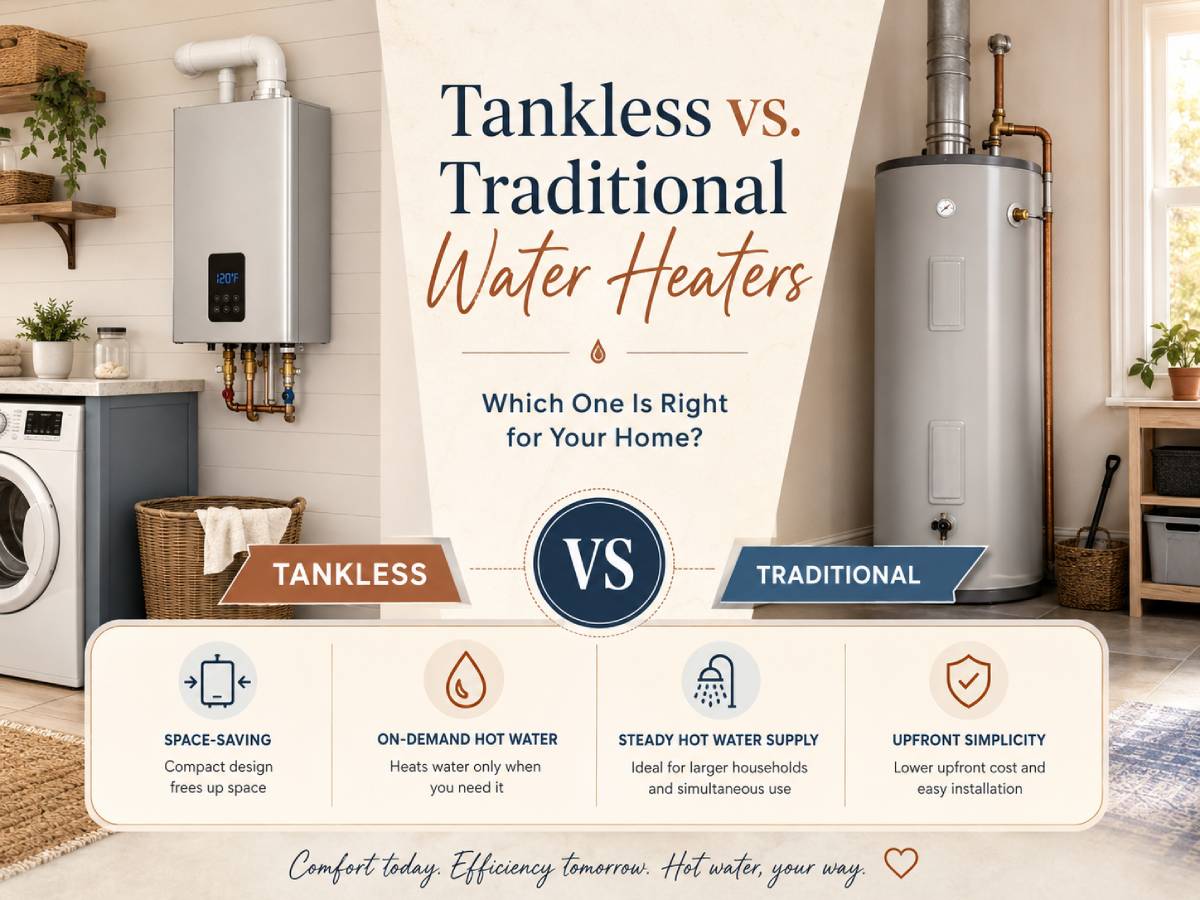
Tankless vs. Traditional Water Heaters: Which One Is Right for Your Home?
When it is time to replace a water heater, homeowners often ask the same question: should I choose a traditional tank water heater or upgrade to a tankless system?
There is no one-size-fits-all answer. The best water heater depends on your household size, hot water usage, budget, available space, fuel source, and installation requirements.
Understanding the difference between the two can help you make a smarter decision before your current water heater fails.
How a Traditional Tank Water Heater Works
A traditional water heater stores hot water in a tank, usually in a garage, closet, utility room, or exterior enclosure. The tank keeps a set amount of water heated and ready for use.
Traditional tank systems are common because they are familiar, widely available, and often less expensive upfront than tankless systems. They can be a good option for households that need a reliable supply of hot water and want a straightforward replacement.
However, because the water is stored and kept hot, tank systems can lose energy over time through standby heat loss. They also have a limited tank capacity, which means a large household can run out of hot water during back-to-back showers, laundry, or dishwashing.
How a Tankless Water Heater Works
A tankless water heater heats water only when you need it. When someone turns on a hot water tap, water flows through the unit and is heated on demand.
Tankless systems are popular because they are compact, efficient, and can provide continuous hot water when properly sized. They can also be helpful for homes with limited space.
However, tankless systems require proper sizing. A unit that is too small may struggle when multiple fixtures are used at the same time. Installation may also require changes to gas lines, venting, electrical service, or plumbing depending on the home and unit type.
Questions to Ask Before Choosing
Before replacing a water heater, consider:
- How many people live in the home?
- How often are showers, laundry, and dishes used at the same time?
- Is space limited?
- Is the existing water heater gas or electric?
- Is the current location properly vented?
- Are there signs of corrosion, leaking, or sediment buildup?
- Is the goal lower upfront cost, long-term efficiency, or space savings?
- Would financing help make replacement more manageable?
A professional plumber can inspect the current setup and explain which options make the most sense.
When Replacement Should Not Wait
Water heater problems can quickly become urgent. Call for service if you notice:
- No hot water
- Rusty or discolored water
- Water near the base of the tank
- Rumbling or popping noises
- Hot water running out faster than normal
- A pilot light or ignition issue
- Unusual odors near the unit
A leaking tank water heater should be addressed quickly to reduce the risk of water damage.
How Specialize Home Services Can Help
Specialize Home Services provides water heater inspections, plumbing repairs, new plumbing installations, and water heater replacement support for Southern California homeowners. Whether you are comparing tank and tankless options or dealing with no hot water, a professional evaluation can help you choose the right system for your home.
Hot water is too important to leave to guesswork. The right replacement can improve comfort, reliability, and peace of mind.
